
Air Quality - Indoor vs. Outdoor
Outdoor air quality, often called ambient air quality, refers to the air in the open environment. Alternatively, indoor air quality refers to all air inside homes and buildings. Indoor air quality determines what we are breathing most of the time, given that most people spend more than 90% of their time indoors.
Indoor air is influenced by a variety of factors including outdoor air pollution, the technical setup of homes and buildings, such as their construction and ventilation systems, and by individual behavior such as cooking and cleaning procedures. This relationship between indoor and outdoor air quality can be summarized as:
indoor air = outdoor air + indoor sources – removal through ventilation and filtration
 Image: Getty Images
Outdoor air quality is regulated and monitored by the Environmental Protection Agency (EPA) using the EPA’s National Ambient Air Quality Standards (NAAQS).
The six regulated key pollutants are:
- Ground-level ozone (O3)
- Nitrogen dioxide (NO2)
- Fine and coarse particulate matter (PM2.5 and PM10)
- Sulfur dioxide (SO2)
- Carbon monoxide (CO)
Outdoor air quality drives regulatory compliance and risk for the entire region, it influences everyone to a similar extend in the same area.
Indoor air quality, however, is not federally regulated and varies greatly depending on outdoor air quality and a building’s condition, as well as the behavior of its occupants. Common indoor pollutant sources are shown in the exhibit below:
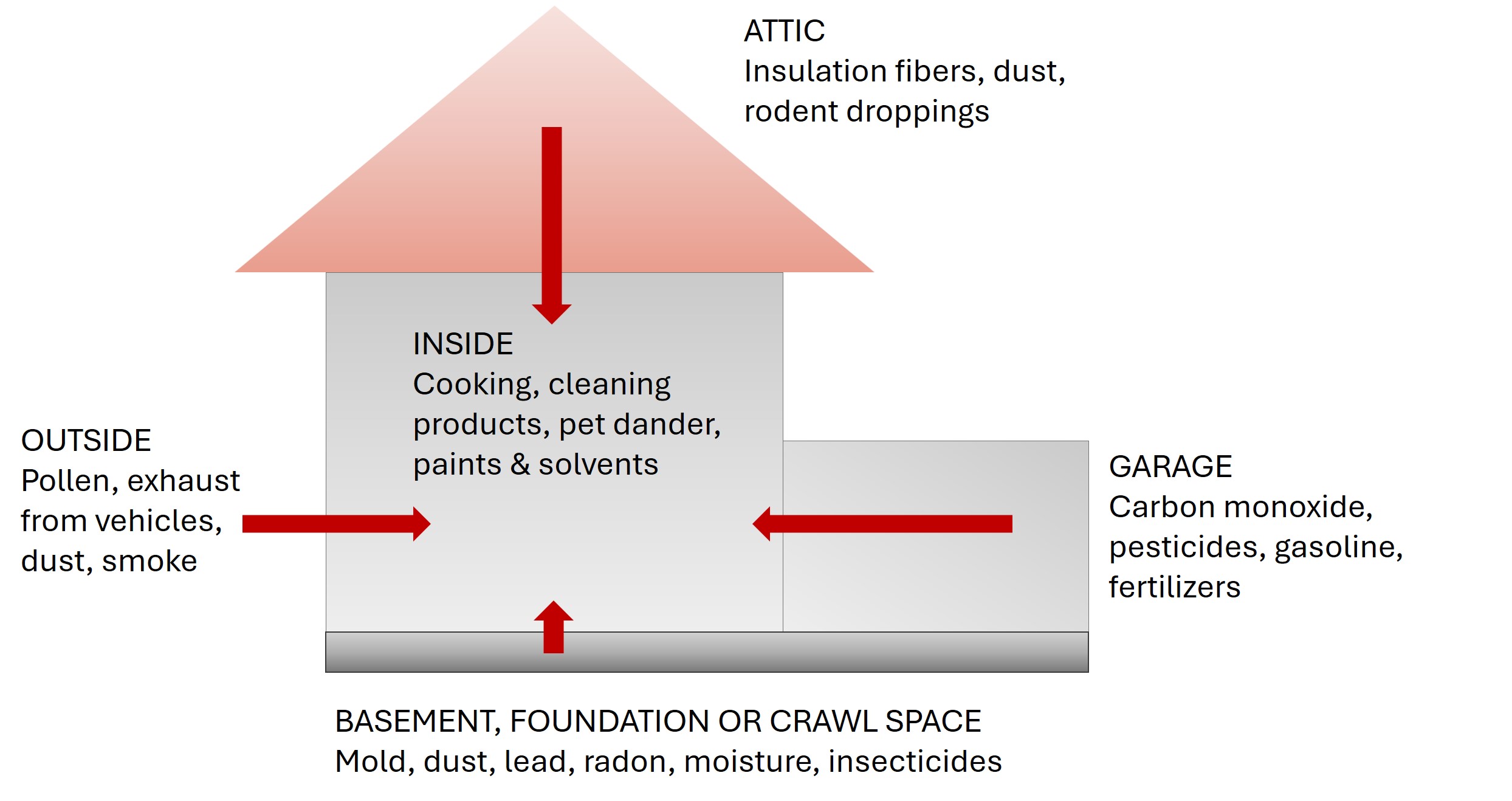 Image: NCTCOG
Key indoor pollutants and their common sources in indoor spaces are:
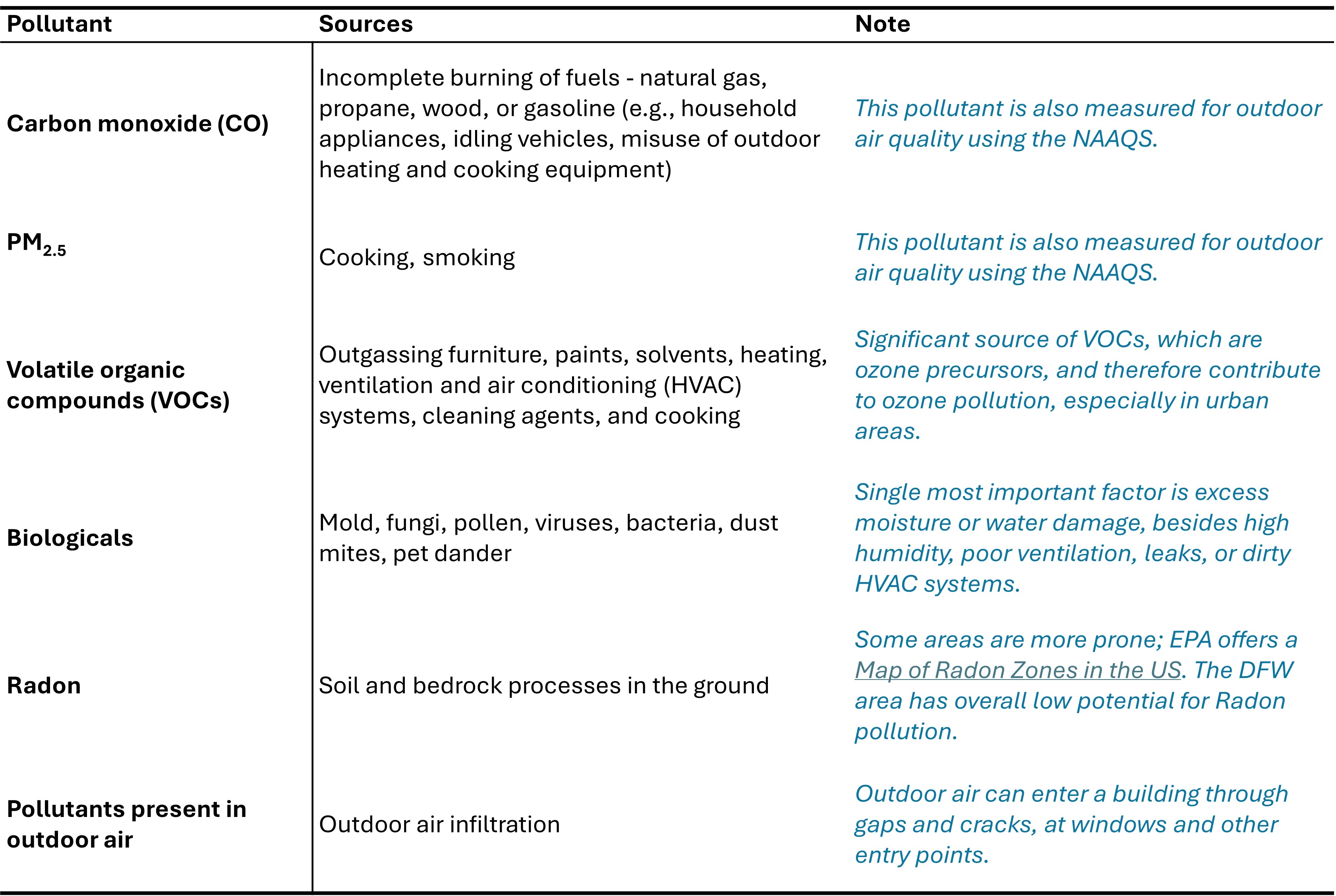
Because older buildings are prone to having more gaps and cracks in their structure, they are more vulnerable to poor outdoor air quality. New buildings can provide better insulation and sealing from outdoor air. However, this insulation and sealant can also trap indoor pollutants if not ventilated properly.
Whereas outdoor air quality is episodic, only occurring under specific outdoor conditions (high heat, low or high humidity, high impacts of emissions, etc.) and impacting an entire geographical region, poor indoor air quality can have a continuous impact if not remedied quickly and only impacts the building occupants, which is also referred to as human exposure.
The good news is that poor indoor air quality can be fixed and can even become better than outdoor air quality.
Air Quality and Building Standards
Building standards and maintenance play a huge role in indoor air quality. The image below shows common air leaks in buildings during both winter (left) and summer (right).
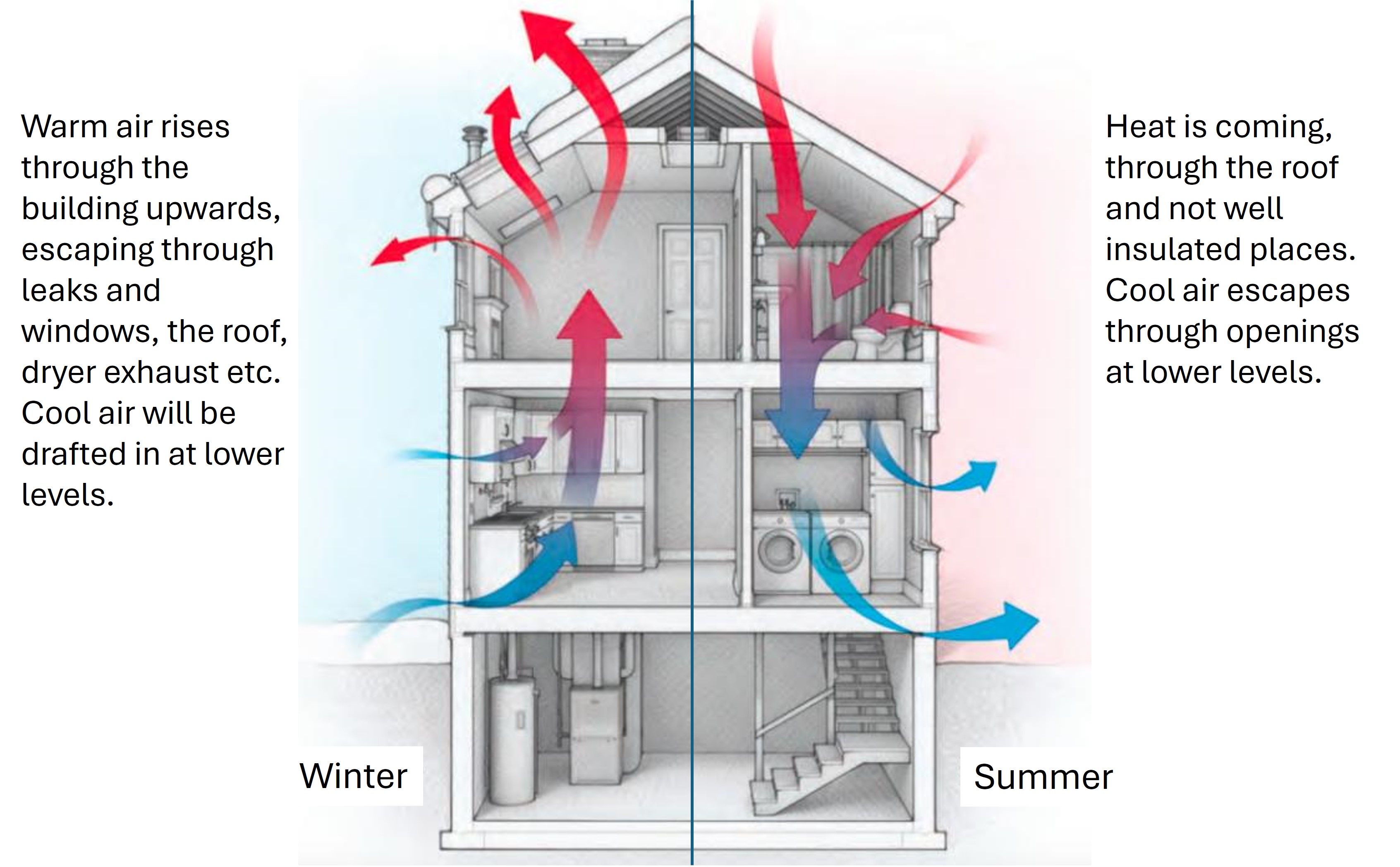 Image reprinted with permission © Active Interest Media
Not all buildings let in outdoor air the same way.
Open the sections of the accordion below for more information about the individual building type.
- Typically have more exposure to the outdoors compared to multi-family-homes (all sides + roof)
- Often leakier, especially if older or not well sealed
- Common leak points:
- Attic openings
- Around windows and doors
- Ducts in attics or crawl spaces
Share walls, floors, and ceilings with other units, therefore usually they have less direct outdoor exposure per unit.
Air can come from:
- Hallways
- Neighboring units
- Building ventilation systems
Less outdoor air may enter directly, but indoor air quality can be affected by neighbors and shared spaces.
Indoor conditions are usually more controlled—but depend heavily on system performance and maintenance.
- Use professional mechanical ventilation (HVAC systems) to control airflow
- Often designed to limit uncontrolled air leaks
- Frequent door openings can still allow outdoor air in
Commercial buildings are subject to a patchwork of building codes, regulation, and standards such as Occupational Safety and Health Administration (OSHA) and American Society of Heating, Refrigerating and Air-Conditioning Engineers (ASHRAE) in addition to varying State and local requirements.
Summary
Drafty buildings let in more pollution. Well-sealed buildings offer better protection - but still need proper ventilation to stay healthy.
In North Texas, high summer temperatures and strong sunlight create ideal conditions for ozone formation - making building protection especially important. Buildings also offer protection from extreme heat, another common challenge in hot Texas summers.
How Does This Impact Health?
Given people are spending approximately 90% of their time indoors, indoor air quality can have significant impacts on their health.
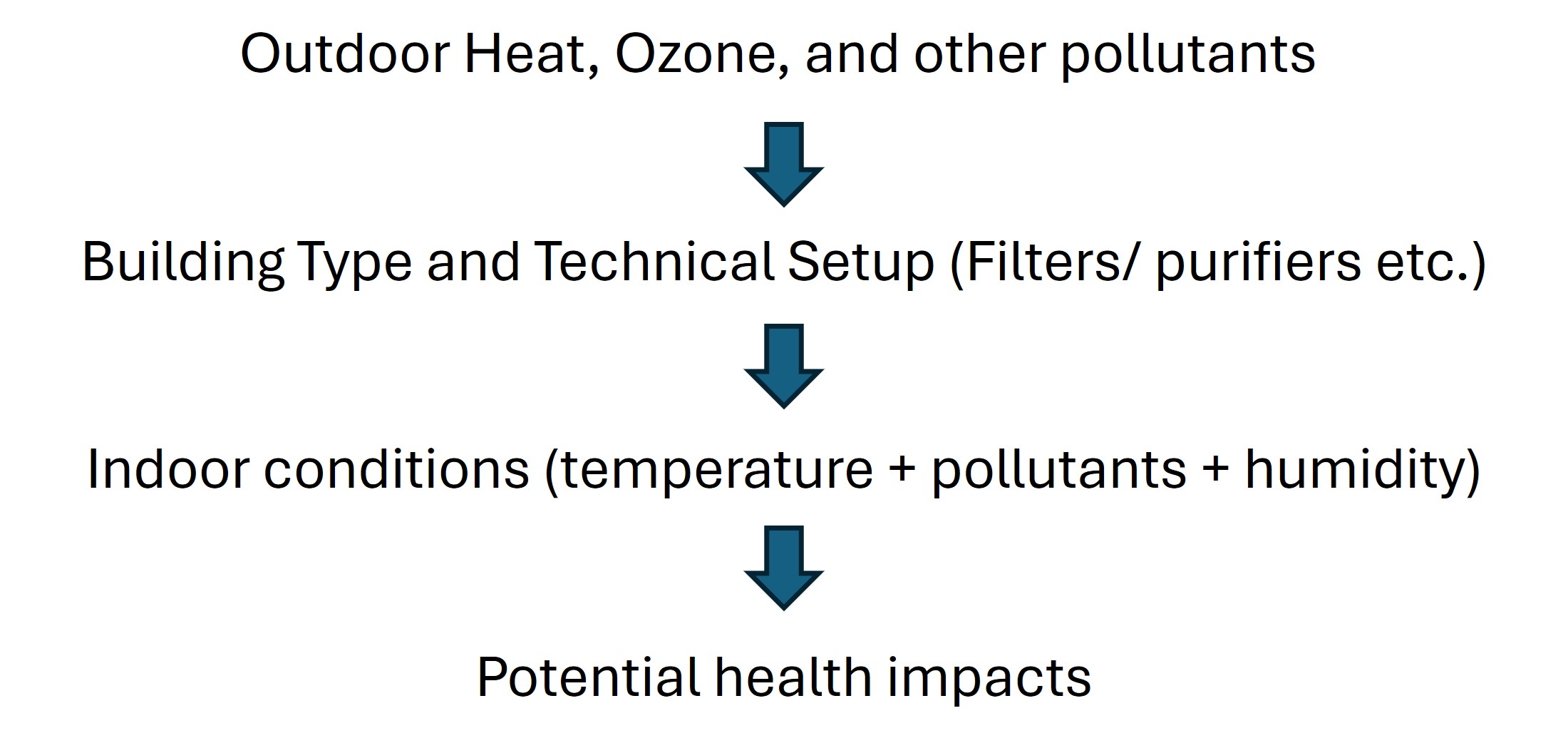
Indoor air quality and outdoor air quality are closely connected. While buildings can reduce exposure to outdoor pollutants, they cannot eliminate it. Continued improvements in outdoor air quality therefore remain essential for creating healthier indoor environments, protecting public health, and building more resilient communities.
For more information on indoor air quality and what you can do to improve it, visit the following websites:
Improving Indoor Air Quality | US EPA
Publications about Indoor Air Quality | US EPA
The Inside Story: A Guide to Indoor Air Quality | US Consumer Product Safety Commission
Sign up for air pollution alerts and learn how you can help improve air quality at www.AirNorthTexas.org.
Please contact Daniela Tower with any other questions.