
Curb Space Management
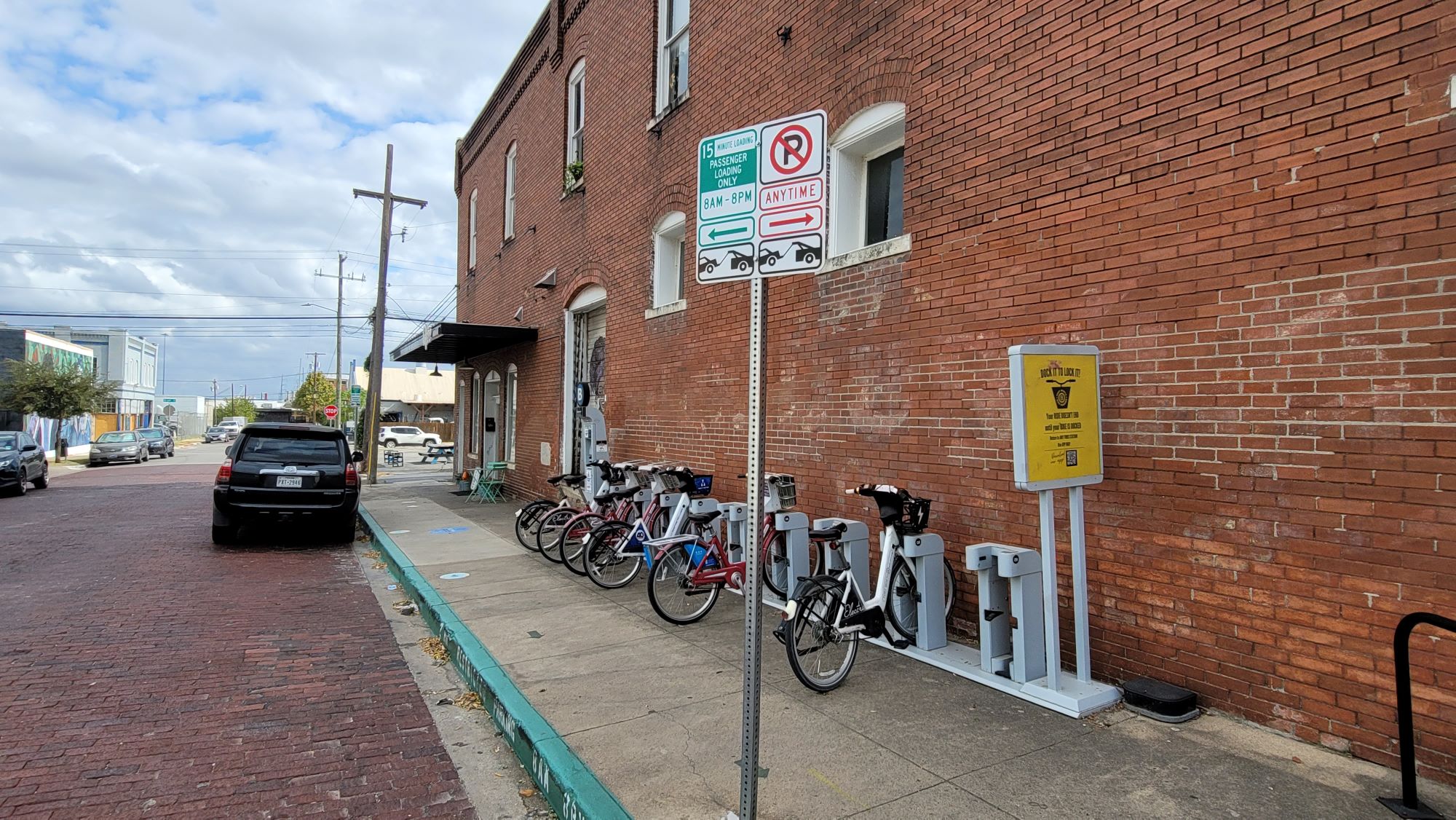
The curb—or on-street parking lane—is a shared public resource increasingly in demand. In North Texas, curb management has often been minimal, relying on basic restrictions like time limits, meters, or designated parking zones. Today, it emphasizes more intentional and innovative practices to support multiple travel modes.
Modern curb management brings order and sets clear priorities for how curb space is used, including parking as well as curbside pick-up, deliveries, passenger drop-off, bike or bus lanes, micromobility zones, and sidewalk or curb extensions.
Key Benefits
Prioritizes Neighborhood Needs – Curb management supports district or neighborhood objectives beyond parking like using on-street spaces for more outdoor dining, resident parking, public plazas, and more.
Enhances multimodal accessibility – It can increase space and amenities for walking, transit, bicycling, shared-mobility services, and other travel modes that can reduce parking demand.
Improvements in Safety and Congestion – Managing curb space near intersections and conflict zones improves safety. Managing space availability can reduce congestion as fewer drivers circle for open parking.
Improves Business Access – It can increase parking turnover and designating space for delivery and pick-ups/drop-offs to improve quicker access to local businesses.
Manages Demand – Using appropriate curb space pricing on-street can reduce demand for driving, or more quickly shift drivers to parking off-street or spaces in less congested areas.
Implementation Considerations
Curb space allocation and management typically happen on a neighborhood or street-by-street level. It will require consideration of various uses, including transit, pick-up and drop-off, pedestrian activity, and bicycle travel. These options should consider area transportation and land uses priorities. For a detailed overview of curbside management tools, strategies and implementation, refer to NCTCOG’s Curb Management Guide.
Curb Lane Use
Actions or Strategies
 Transit
- Transit only lanes
- Queue jumps
- Bus bulbs
- Right turn pockets
- Automated enforcement
 Loading/Unloading Zone
Rideshare Networks
- Video data collection
- Geofencing
- Monetized passenger loading zones
Deliveries
- Monetized commercial/freight loading
- Demand-based loading zone fees
- Demand-based loading zone time restrictions
 Pedestrian
- Curb extensions
- Widening sidewalks
- Parklets
 Bicycle
- Protected bikeways
- Designated parking areas
- Designated ride areas
 Parking
- Demand-based pricing
- Time-limited parking
- Off-street parking
- Residential/neighborhood parking permits
- Flexible curb lanes
- Parking benefit/management districts
Responsible Party
Action
 Public Sector
- See the NCTCOG Curb Management Guide for recommendations
- Assess on-street parking concerns in neighborhoods and special districts
- Inventory current curb uses in high-demand areas
- Identify signage, markings, technology, and strategies for curb management
- Develop goals and objectives for curb space utilization
- Recommend district-appropriate curb management strategies
- Conduct public outreach and build stakeholder support
 Private Sector
- Coordinates on curb use priorities
Location
The application of curb space management often works best in mixed use and commercial districts where on-street parking is used. They can apply in new buildings or existing properties.
Cost
The cost associated with curb space management includes the upfront expenses for planning and data collection and then can vary greatly based on implementing or updating parking-related signage, markings, and technology, such as parking meters.
Timing
The strategy applies to new development or redevelopment and is often applied to existing developments.
Technology
To improve curbside management, various technologies can inform drivers about rules, pricing, time limits, and availability, while also enhancing enforcement. Examples include driver information tools such as dynamic wayfinding and digital signage, static informational signage, parking availability platforms, and mobile applications, as well as enforcement and management tools like smart payment (meter) technologies. For more information, see the Parking Technology Guide.
Case Studies
San Francisco, CA
The Curb Management Strategy for the San Francisco Municipal Transportation Agency (SFMTA) guides the management and allocation of the city’s limited and highly valuable curb space, addressing both current needs and anticipated future demands. The strategy proposes a range of recommended tools, policies, legislative updates, design standards, and process improvements for the SFMTA to consider. These initiatives are designed to support six primary objectives, including:
- Advance a holistic planning approach
- Accommodate growing loading needs
- Increase compliance with parking loading regulation
- Improve access to up-to-date data
- Rationalize policies towards private uses of curb space
- Promote equity and accessibility
Dallas, TX
Adopted in 2024, The City of Dallas’s On-Street Parking and Curb Management Policy is a guiding framework with detailed policies, recommendations and action items that are broadly applicable both in central Dallas and other mixed-use and commercial developments with high demand and competition for on-street parking. The policy outlines five key objectives to better manage this demand and competition.
- Provide the safe and efficient movement of people and goods
- Increase access to business in mixed-used commercial districts by ensuring adequate turnover of on-street parking with time limit meters
- Accommodate growing loading needs and manages loading and on-street parking demand in commercial and mixed-use districts
- Promote equity and accessibility while adapting curb lanes to evolving transportation
- Manage expectations and simplify the experience for all curb users by making regulations clear and predictable