
Fee in Lieu of Parking
A fee-in-lieu of parking spaces is a development-code strategy where developers can pay a fee into a fund rather than providing parking on-site. The fund is typically used to create shared public parking and/or other mobility investments in the same neighborhood as the development. These fees are typically based on an estimated cost per space and multiplied by the number of required spaces the developer chooses to defer.
Key Benefits
Supports Infill and Density: This allows more density, especially on smaller infill sites where the cost and space requirements of parking would otherwise make development infeasible.
Encourages Shared Parking: Creates a path to help fund public shared, strategically managed, efficient parking rather than on-site reserved parking which often is unused most of the day.
Funds Public Improvements: Captures private funding for public parking and needed mobility improvements.
Flexibility and Efficiency: Creates flexibility to maximize development while also encouraging efficient shared parking and use of land.
Implementation Considerations
In-lieu fees are implemented via development codes. They should be regularly calibrated to ensure they effectively incentivize developers to avoid constructing excess parking. In some cases, it may be beneficial to set fees on a case-by-case basis depending on the scale and location of a given development. In-lieu fees can also benefit from the presence of a mobility benefit district which may strategically invest fee revenues into key improvements or municipal parking facilities.
Shared action (either public, private or third-party authority)
- Build places that are walkable and make reducing parking through fee-in-lieu viable
- Collect data to understand parking demand from similar sites to better evaluate reducing parking supply with fee-in-lieu
Responsible Party
Action
 Public Sector
- Establishes in-lieu fee program by code. It should have a clear policy framework for all parties involved.
- Sets and adjusts in-lieu fees.
- Defines how revenues can/cannot be invested, typically toward expanding/improving area parking or mobility conditions.
- Manages fee collection, financial oversight, and reporting. Ensure appropriate transparency with key stakeholders.
- Make strategic investments with funds in coordination with neighborhoods.
 Private Sector
- Uses fee option to increase the viability of infill projects and increase density that would not be possible if building full requirement of on-site parking. Provides feedback to municipality on effective fee rates.
- Private neighborhood stakeholders should be involved in on strategic use of collected-fee revenues in their district.
Location
This typically applies in urban areas or mixed use, areas with transit, commercial or entertainment districts where land can be limited and walking to shared public parking is feasible.
Cost
Time and process for municipalities to update zoning codes. Private sector developers bear most cost from permitting time and paying the fee-in-lieu of spaces, typically several thousand dollars per parking space but may be a net gain from added density value.
Timing
Applies to new developments—where it is typically part of the zoning approval process.
Technology
This strategy does not directly use technology for parking management.
Case Studies
Miami, FL
The Coconut Grove Fee-in-Lieu Program, part of the Coconut Grove Business Improvement District, aims to improve parking availability, manage parking resources, and support the development of a denser, more walkable community. The fee is set at $10,000 per parking stall or a monthly payment of $50 per stall. Funds collected through the program can be used to:
- Acquire property for parking purposes;
- Construct, maintain, operate, lease, manage, or provide off-street parking facilities for public use;
- Fund publicity campaigns, graphics, signage, and other informational materials;
- Coordinate parking facility improvements and expansions with nearby public transportation plans and operations;
- Provide public shuttle, tram, or trolley services, along with related physical improvements such as bus shelters and right-of-way modifications; and
- Cover other parking-related costs.
Since the program’s inception in 1993, developers have opted out of constructing more than 900 parking spaces by participating in the program. A majority of the collected funds were used to develop a 416-space parking garage with ground-floor retail. Additional expenditures included a $250,000 study for a downtown circulator and $100,000 for a parking mitigation project, which involved landscaping improvements and the installation of traffic control devices to enhance parking and pedestrian access.
Source
Carrollton, TX
In the City of Carrollton’s Transit Center District Regulations, developers may pay a cash fee to meet district parking requirements. The City Manager or their designee is granted the authority to establish “the cost of construction of a parking space in a parking structure” annually. This establishes a baseline for determining an in-lieu fee.
Source
Dallas, TX
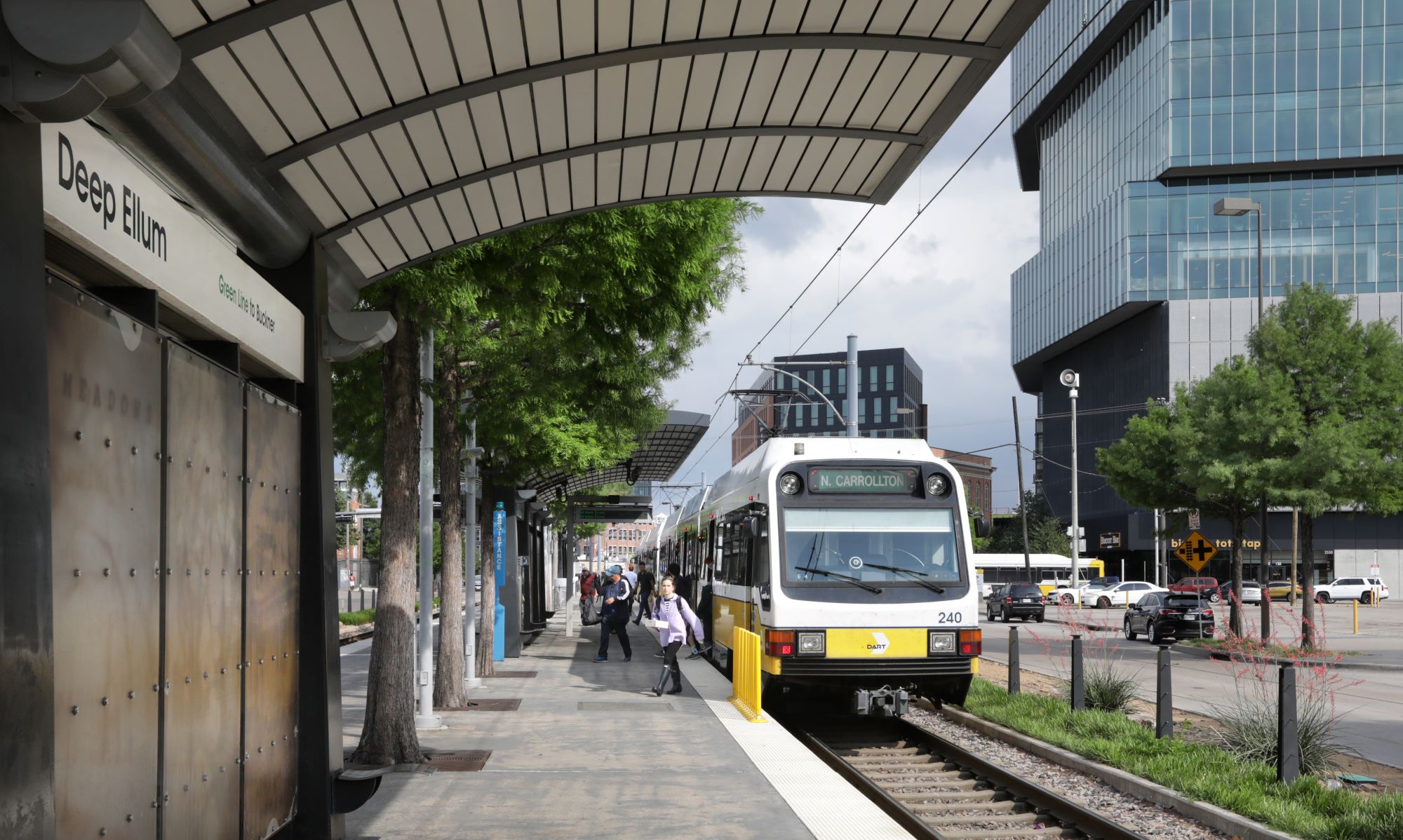
The City of Dallas, through Planned Development District No. 269, offers a Cash-in-Lieu Parking Program for properties in Deep Ellum. Under this program, a property owner may make a one-time cash payment instead of providing the required off-street parking spaces for a use within an original building, as outlined in this section. The payment amount is determined by calculating three-fourths of the cost of constructing a single parking garage space and multiplying that figure by the number of parking spaces waived through the cash payment.
Source