
Parking Availability Platforms
Parking Availability or Information platforms are technology that can provide occupancy and wayfinding information on parking spaces in real time. These platforms usually provide information through websites or mobile applications on items such as:
- The location of public and shared parking facilities
- Hours of operation
- Price and restrictions
- Real-time or near-time parking space availability
These platforms rely on hardware in each parking facility such as cameras, sensors, or the payment/access control systems to provide updated occupancy information. While the goal of the platform is for drivers to use it in planning a trip or navigating a facility, it may need to be paired with on-site wayfinding for maximum effect.
Key Benefits
Improve Parking Visibility/Awareness – Makes available public parking easier to find, potentially reducing complaints or customer frustration with finding parking. Can more clearly communicate dynamic pricing.
Saves Time – Drivers save time while looking for a spot, reducing circling for parking and potentially reducing congestion at peak times.
Improves Parking Utilization – Combined with wayfinding, it can increase the occupancy of open spaces. Property owners may also have a clearer idea of parking use when occupancy monitoring is part of the platform.
Implementation Considerations
Parking availability platforms can be installed alone or in addition to other management strategies. This requires software supporting public information via website or mobile applications. It also requires on-site hardware or payment systems to provide live data. Platforms are also most effective when the physical signage and branding on-site matches the digital elements and wayfinding. For this strategy public and private implementation are nearly identical.
Shared Actions (Public, Private or Third-party Authority)
- Determine parking facility or district of parking spaces where consolidated availability monitoring and platform would apply
- Determine method/technology of collecting real time occupancy information either from new or existing infrastructure to feed into platform interface
- Initiate the development, branding, security and outreach or marketing of the platform
- Identify signage and wayfinding solutions to complement digital parking availability platforms, guiding users to off-street parking and garages
Responsible Party
Action
 Public Sector
- Ensures elements used in available platforms are allowed under city code including things such as allowances in sign ordinances.
- May perform all implementation steps of a parking availability platform.
 Private Sector
- May perform all implementation steps of a parking availability platform.
Location
Parking availability platforms work best in priced areas like downtowns and dense urban centers but can also be used in free suburban areas with sufficient funding to monitor occupancy for both on- and off-street spaces.
Cost
Parking availability platforms typically cost a few to several hundred dollars per space to install, depending on the sensor/data collection method. Ongoing maintenance costs and staffing will also be required.
Timing
The strategy can be applied to existing development and used in new development, especially for larger properties.
Technology
Parking availability is key technology for informing drivers. They require technology like cameras, parking space sensors, entrance sensors or even smart payment (meter) technology to monitor occupancy and report it on a public interface. Additionally, they may incorporate parking guidance systems and dynamic wayfinding and signage to achieve management of spaces. For more information, refer to the Parking Technology Guide.
Case Studies
Pittsburgh, PA
ParkPGH is a real-time parking availability and pricing platform covering 22 off-street facilities in Pittsburgh's Cultural District. Developed by the Pittsburgh Cultural Trust with private partners and the city parking authority, it communicates garage availability via mobile app, web, text, and phone. Participating operators pay an annual fee and must provide real-time data. Surveys show ParkPGH has improved perceptions of parking availability, with requests to expand the system citywide.
Source
Dallas-Fort Worth International Airport
Dallas-Fort Worth International Airport provides real-time parking availability—updated approximately every five minutes—across terminal, express, remote, and valet parking. Its platform, accessible via website and mobile app, shows occupancy, amenities, pricing, and open/closed status, helping travelers make informed parking decisions. Select terminal garages also feature a guidance system with red/green lights to direct drivers to available spaces.
Source
University of Texas at Arlington
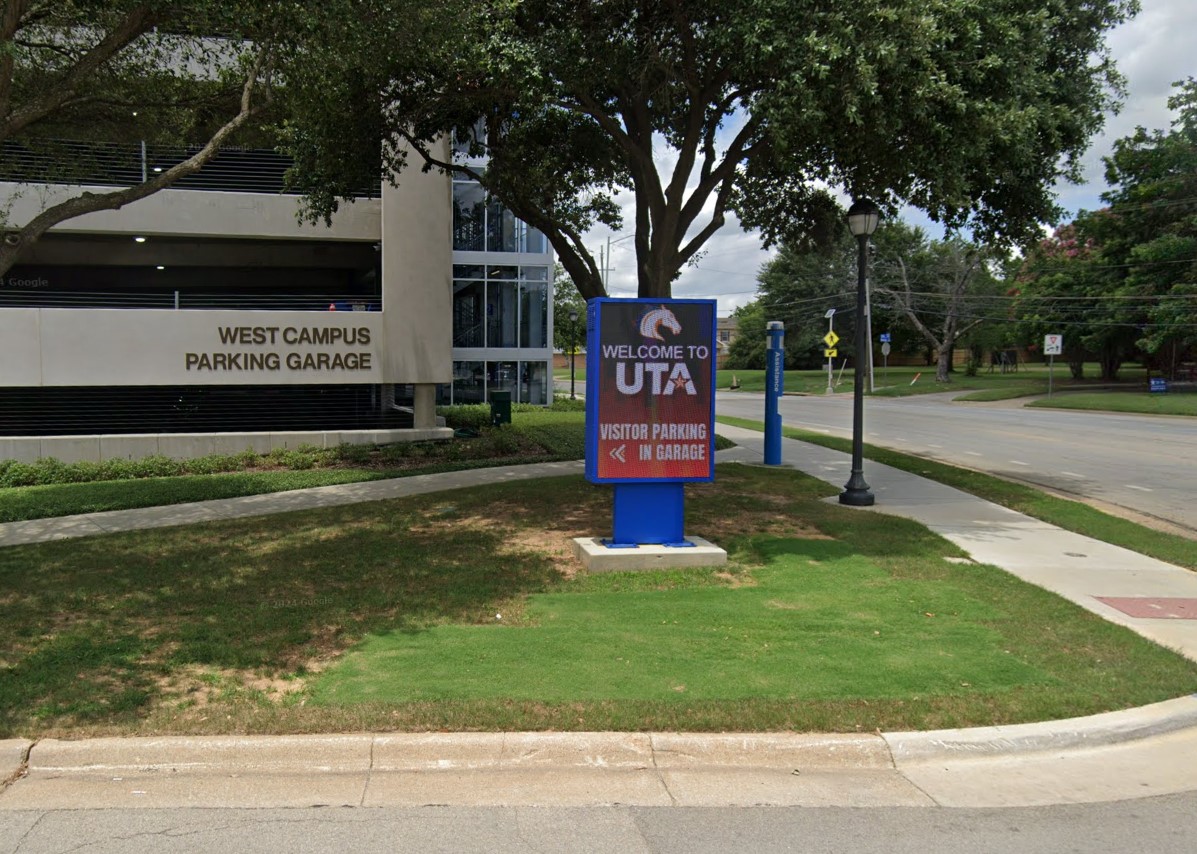
The University of Texas at Arlington and private company Modii launched a parking finder website giving students, staff and visitors real-time knowledge of parking space availability, electric charging location and garage/lot percentage occupancy. At the time of launch, 39% of the parking lots were equipped with parking occupancy sensors and expected to grow to 85% over three years. The UTA Parking Finder is currently in its Beta phase with improvements to come in the near future.
Source