
Permits and Special Users
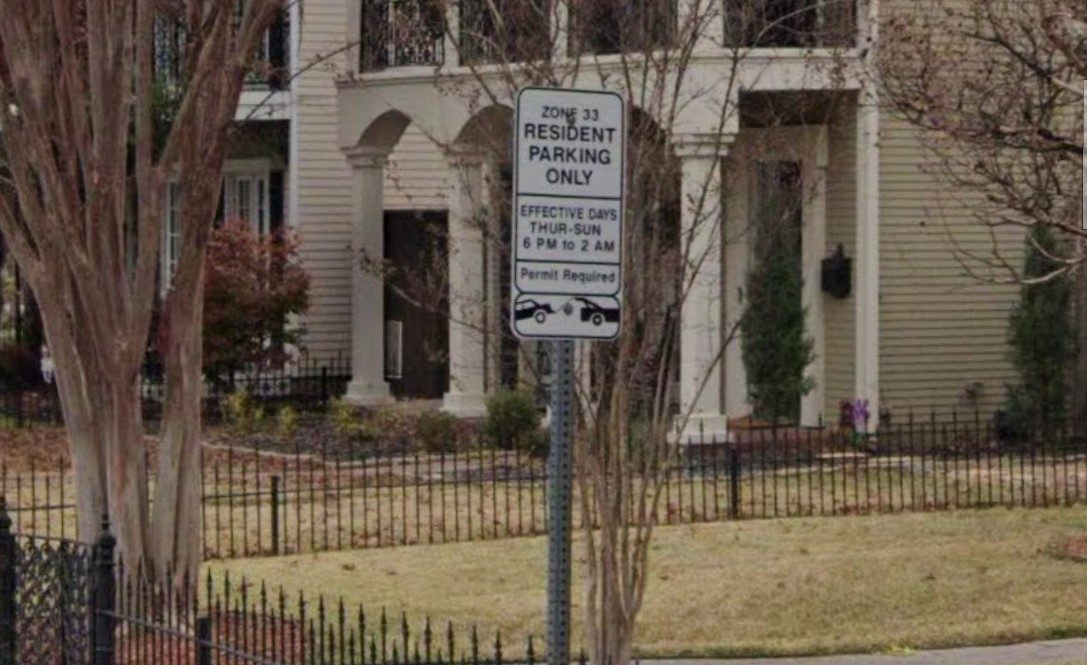
Permit programs manage competition for parking among residents, employees, and visitors, typically on streets or in limited off-street areas. They can include agreements for private off-street spaces for special users and are usually part of parking management districts alongside other mobility and parking initiatives.
Key Benefits
Improved Access – Ensures that those who live or work in an area have access while also accommodating visitors and customers.
Distributed Demand – A permit process can direct some users to less visible, more out-of-the-way parking rather than the highest demand spots (usually on-street) where there is a false sense of scarcity.
Economic Development – Managing spaces for special users can improve employee retention or resident support for parking management that allows more commercial activity.
Reduced Traffic Congestion – Can reduce the number of vehicles searching for parking, reducing overall traffic in neighborhoods and business districts
Implementation Considerations
Neighborhood groups are likely to begin the process of permit and management by pointing out the issue. City rules regarding on-street parking enforcement are the key mechanism in this strategy. Engagement with stakeholders is likely to be the biggest element of this strategy and private neighborhood groups or organizations are likely key to off-street parking use for permits.
Shared action (either public, private or third-party authority)
- Engage in public outreach and facilitate stakeholder buy-in through awareness campaigns.
- Coordinate on the designated on-street or off-street parking spaces impacted relative to parking demand.
- Discuss the qualifications for, number of, and cost of parking permits, relative to demand impacts desired.
- Ensure awareness of permit programs through media, signage, campaigns, etc. for residents, visitors, employers and employees.
- Implement monitoring and enforcement as needed.
- Share data and jointly review program effectiveness, impacts and compliance trends to guide adjustments over time.
Responsible Party
Action
 Public Sector
- Draft Ordinances to legally establish parking permit programs
- Determine funding, staffing, and enforcement process for permits
- Define the designated district where parking permit programs can be implemented
- Issue and monitor parking permits
 Private Sector
- Coordinate on sharing information to residents and employees about the program.
- Neighborhood groups or entities like public improvement districts can initiate the process by defining the issues and needs
- Neighborhood groups or entities like public improvement districts may need to negotiate use of private off-street parking for special users like employees
- Participate in permit and special users programs and share occupancy data for relevant facilities
Location
Commonly needed in areas such as downtown, entertainment district or other high-traffic destination districts where many outside visitors often occupy most of the available parking and create spillover into nearby streets. These programs can be applied to both on-street curb parking and off-street parking lots and garages.
Cost
Coordination, public engagement, ordinances/legal process, and websites/signage cost will be required to set up. Additionally, regular monitoring and cost are ongoing. However, cost may be offset by revenue from selling permits or on-street metered spaces and may reduce the need to build costly new structured parking.
Timing
The strategy applies to new developments and can also be implemented in existing buildings.
Technology
Permit and special user parking programs can benefit from technologies that inform drivers—such as parking guidance systems, dynamic and static signage, parking availability platforms, and mobile applications—and support enforcement and management through smart payment (meter) technology and parking access and revenue control. For more information, refer to the Parking Technology Guide.
Case Studies
Los Gatos, CA
The Los Gatos Employee Permit Parking Program reduces downtown congestion by designating nearly 500 on-street and municipal lot spaces for employee permits, shifting employee parking away from high-demand visitor areas. More than 800 employees and businesses have applied for digital permits, helping improve parking availability for customers and guests.
Source
Source
Source
Austin, TX
The Affordable Parking Program is a public-private partnership in Austin, Texas that provides service and entertainment industry employees with discounted off-street parking passes ($35–$75 per month). More than 20 privately operated garages participate, while the City supports the program by including two city-owned garages and maintaining a website of participating locations. The initiative offers employees affordable parking and helps garage operators fill spaces during low-demand periods.
Source
Source
Dallas, TX
The City of Dallas created the Deep Ellum Residential Parking Permit Program to address parking issues caused by visitors to the nearby busy nightlife and entertainment district. The program establishes permit-only parking zones during designated hours limited to residential parking access. Vehicles must display a valid parking permit (rearview mirror hang tag) during restricted hours to park in the zone. Unauthorized vehicles may be ticketed, towed, or immobilized. To obtain a permit, applicants must show proof of residency or business ownership in Deep Ellum by providing a current driver’s license, recent utility bill or lease agreement, and proof of vehicle insurance.
Source
Source