
Public-Private Development
Public-Private Partnerships (PPPs) for parking are agreements where a government and private developer create developments that include public parking. In North Texas, these often target downtown redevelopment where land is limited and construction costs are high. Though more complex, PPPs are valuable in locations where urban design limits standalone parking structures.
Key Benefits
Optimized Shared Public Parking – Creates more public parking usually in a garage shared with reserved spaces for tenants building.
Cost Efficient – Cost sharing in the development partnership is more efficient than building a stand-alone garage.
Preserves or Increase Development – Often PPP garages allow an area to add many parking spaces without having to knock down other buildings and allow increased density of development.
Implementation Considerations
Public-Private Partnership for parking typically requires a local government to initiate the process. Often these start with requests for proposals (RFP) for development on land the government owns. Alternatively, local governments may provide funding to a proposed development agreeing to add additional public parking to an already planned structure.
Shared action (either public, private or third-party authority)
- Determine appropriate parking amounts for reserved and public parking and capacity of site.
- Develop an agreement between public and private entities regarding the funding, development, and management of the shared parking facility.
- Engage area stakeholders as needed.
Responsible Party
Action
 Public Sector
- Initiates the process with an RFP or proposed partnership with a private development.
- Determine public land and/or funding support proportional to parking need.
- Provides area wayfinding signage to direct drivers to public parking in new facility as appropriate.
 Private Sector
- Determines the site/ project design in coordination with the local government.
- Constructs the parking facility and on-site signage.
Location
Often most applicable in mixed use, commercial or entertainment districts were there’s a need to increase the supply of public parking. Downtowns in North Texas’ suburbs have been a primary location for this strategy.
Cost
Include the construction, maintenance, and development agreement soft costs. While it may be millions of dollars to partner on parking structures, it’s a net benefit to the public in the long term.
Timing
This strategy applies to new developments.
Technology
Technology tools that help drivers identify parking in public-private developments include parking guidance systems, dynamic and static signage, parking availability platforms, and mobile applications. For more information, refer to the Parking Technology Guide.
Case Studies
Montgomery County, MD
The Flats at Bethesda Avenue in Downtown Bethesda, Maryland, is a 1.4-acre mixed-use project developed through a public-private partnership under Montgomery County’s Parking Lot District program. It features 162 residential units (including 38 affordable workforce units), 28,000 sq. ft. of retail/restaurant space, and a four-level underground garage with over 980 public parking spaces. The garage is County-owned and operated, while the building above is privately managed.
Source
Arlington, TX
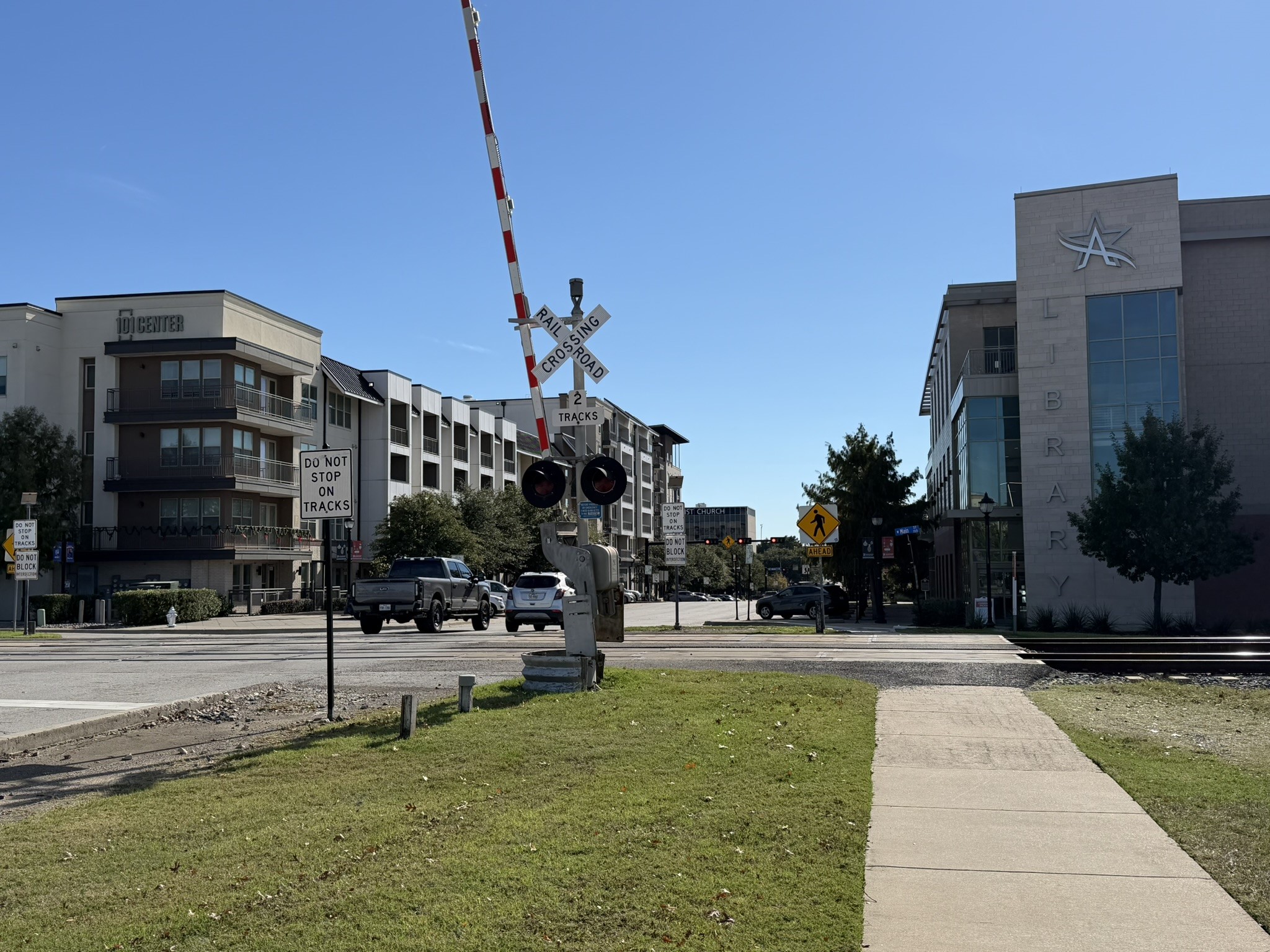
As part of redeveloping Arlington’s downtown public library and city council chambers, the City of Arlington partnered with a private developer to put parking for downtown and the public library in the garage of a new mixed-use development. In 2015, 101 Center replaced the old library with a new mixed-use development with 200 apartments, retail space, restaurant space, and a 500-space parking garage. The first level of the garage is free public parking for public parking for downtown visitors, City Hall patrons, and visitors to the new library across the street.
Source
Source
Carrollton, TX
The City of Carrollton executed its first public-private partnership downtown to develop The Union at Carrollton Square, a mixed-use project featuring 179 rental apartments and a restaurant on the ground floor. The entire development includes access to a five-level, 155,330-square-foot parking garage that provides 125 free public parking spaces for Downtown Carrollton patrons.
Source
Source