
CroSS-DFW
Crossing Students Safely in the Dallas-Fort Worth Region (CroSS-DFW)
Advancing Regional School Zone Safety
The North Central Texas Council of Governments (NCTCOG) received $5 million through the federal Safe Streets and Roads for All (SS4A) grant program in 2024 to improve safety for students walking to school in areas near high‑injury roads across the region. The RTC approved a $1.25 million match for a total of $6.25 million to address this important regional issue.
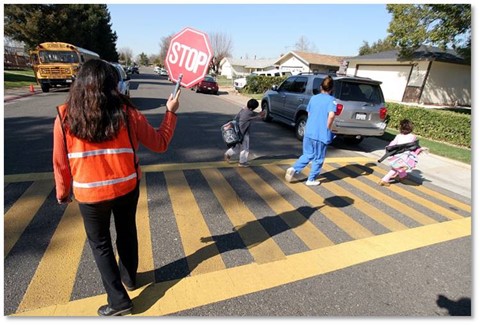
The project, Crossing Students Safely in the Dallas‑Fort Worth Region (CroSS‑DFW), focuses on developing coordinated, data‑driven systems for crossing guard implementation, student crossing safety, and improving driver behavior in school zones. NCTCOG will work closely with local governments, school districts and campuses, and other key stakeholders throughout the study.
Study Focus
Understanding Current Conditions
The project will investigate how crossing guards are currently established and managed across multiple jurisdictions. Activities include:
- Detailed site analyses of school zones.
- Engagement with school district, school, and local government staff.
- Outreach to document challenges and needs.
- Review of existing practices, gaps, and safety concerns across the region.
Safety Recommendations & Regional Crossing Guard Model
Based on data collection and stakeholder input, NCTCOG will develop:
- A set of regional safety recommendations for school zone improvements.
- A crossing guard framework that cities and ISDs can use to guide decision‑making for:
- Crossing guard placement
- Crossing guard staffing and management
- Complementary safety measures
Technology Demonstration Activities
The project will explore and test new technologies to improve driver awareness in school zones. Activities may include inventory of school zone flashers and signs, enhanced warnings, and systems to interconnect signals, flashers, and crossing guards. School zone speeds will be measured before and after the intervention.
Intended Outcomes
Local Outcomes
- Clear documentation of existing conditions and challenges related to crossing guard programs.
- Tailored safety recommendations for schools and local jurisdictions.
- Technology strategies to enhance driver awareness and compliance in school zones.
Regional Outcomes
- A regional crossing guard framework to standardize and support decision‑making.
- Improved planning coordination among cities, ISDs, and regional partners.
- Data and insights to advance the region’s broader Toward Zero Deathssafety goals.
- Foundations for long‑term integration of school zone safety technologies.
For more information, please contact Kyle Hoener at khoener@nctcog.org.