
Eliminate or Reduce Parking Requirements
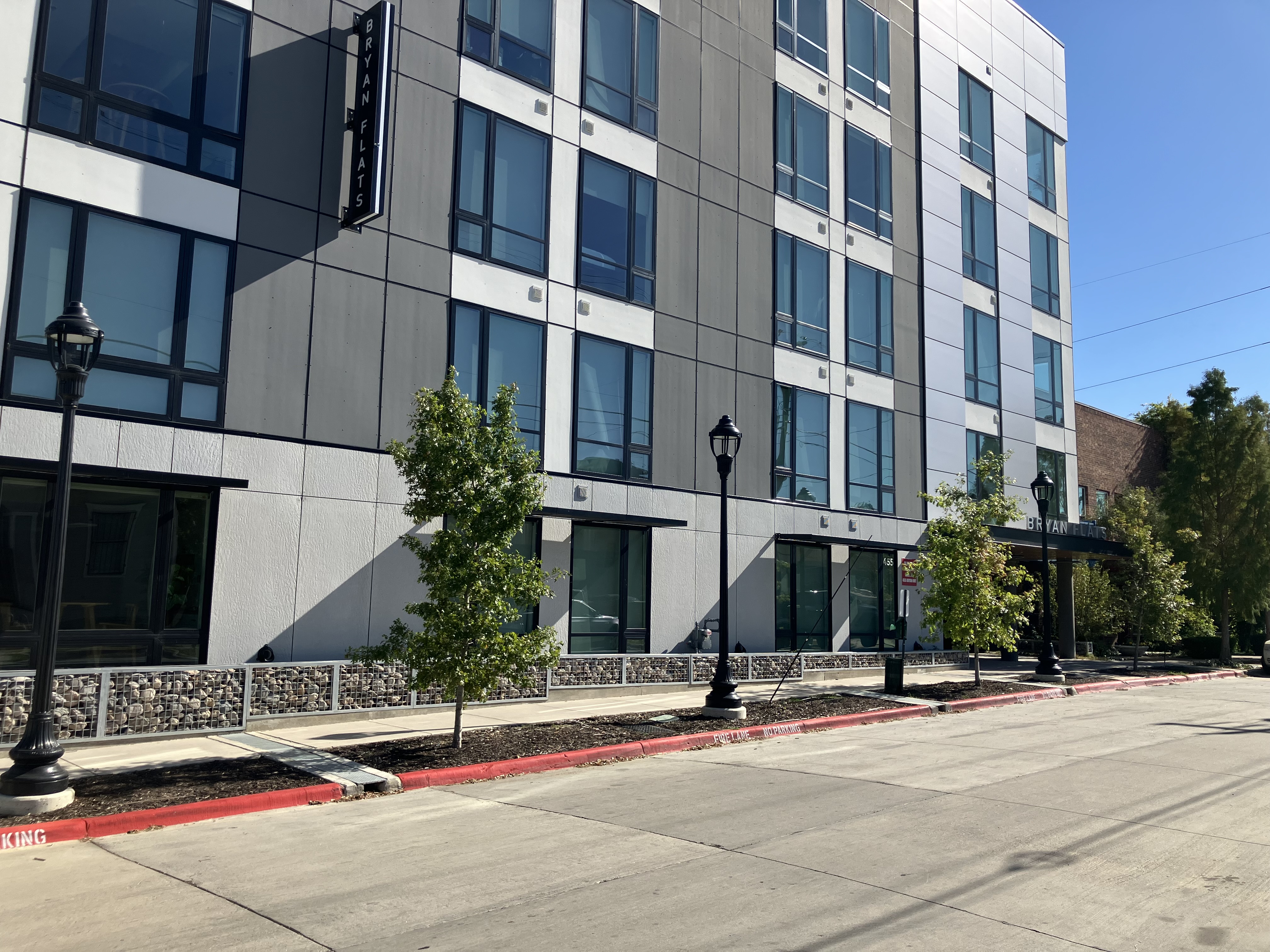
Municipal parking requirements mandate minimum numbers of spaces based on fixed ratios, often using limited data and offering little flexibility. This can force developers to build more parking than needed. Reducing or eliminating minimums gives developers greater flexibility and encourages more data-driven parking decisions.
Key Benefits
Greater Flexibility – Allows developers to build less parking, giving them greater flexibility in designing and programming their projects appropriate to the context and design.
More Development – Allows for more infill and building re-use as parking cost and space constraints are often a powerful limit on how much can be built or use of a particular site.
Development Cost Savings – Removes the cost of unneeded parking allowing increased space for revenue generating leasable space. Parking in many cases does not generate revenue but is a costly amenity.
Optimizing the Urban Environment – Reducing required parking allows for more walkable design by freeing up space and allowing increased density.
Implementation Considerations
This typically requires a zoning policy change that can be a complex, lengthy process that involves data analysis, stakeholder input, and coordination meetings to effectively implement. Furthermore, often to mitigate concerns, it’s paired with various parking management or other mobility measures. Additionally, in auto-oriented regions like North Texas, eliminating parking minimums may not reduce parking unless cities set additional limits or guide the private market. Careful planning and data-driven analysis is important to identify feasible parking reductions. Participation in the North Texas Regional Parking Database can help build more data driven findings.
Shared action (either public or private)
- Assess parking demand and peak usage periods to determine whether the existing parking supply is being fully utilized.
- Coordinate with stakeholders to assess the feasibility of reducing or eliminating parking requirements at different geographies within a city.
- Evaluate peer- cities for lessons learned and outcomes from eliminating parking requirements.
Responsible Party
Action
 Public Sector
- Removes or significantly reduces minimum parking requirements in the zoning code, either within designated specific locations or city wide.
- Provide detailed guidance to the private developers to show successful examples of developments providing less parking than the perceived standard.
 Private Sector
- Collects and shares data on observed parking use with local governments.
- Uses reduced or eliminated parking requirements in code to build more efficient parking supply.
Location
Applies to new buildings and redeveloped sites. Reduced or eliminated parking requirements can be implemented at the building, corridor, neighborhood, district, or city scale, often targeting transit-served or walkable downtown area.
Cost
Eliminating or reducing parking requirements can be a complex, lengthy process for local governments. It has the potential to eventually save money for developers and cities with reduced permitting time and more revenue generating square feet of building space instead of parking.
Timing
Applies to both new developments—where it is typically part of the zoning approval process—and existing developments seeking a change of use, added density, or other modifications that may trigger parking requirements.
Technology
This strategy does not directly use technology for parking management.
Case Studies
Austin, TX
The City of Austin has become one of the largest cities in the United States to eliminate parking minimum requirements across all land uses. Over the past decade, the city has steadily reduced parking facilities. In 2013, parking requirements were removed for new downtown developments, and early 2023, the City Council extended this policy to bars. This change is part of a broader effort to ease land-use regulations and increase housing supply in response to the housing affordability crisis that intensified in 2020.
Source
Source
Dallas, TX
On May 14, 2025, Dallas adopted the Dallas Parking Reform, eliminating most one-size-fits-all parking minimums and creating a more flexible, context-sensitive system. The update to Chapters 51 and 51A removes fixed parking requirements so parking can better match actual demand and provides clearer, more predictable regulations.
Key changes include removing parking mandates for:
- Downtown and areas within ½ mile of light rail or streetcar stations
- Historic or landmarked properties
- Office and most retail uses
- Industrial/heavy commercial uses unless adjacent to single-family homes
- Bars and restaurants under 2,500 sq ft
- Institutional and recreation uses
Citywide parking minimums were reduced for:
- Residential uses
- Bars, restaurants, and commercial amusement
- Single-family/duplex homes, now set at one space per unit in those zoning districts.
Fort Worth, TX
In 2000, Fort Worth adopted Ordinance No. 14556, creating form-based mixed-use districts (MU-1 and MU-2) to support higher-density, transit-oriented development with compatible commercial uses. The ordinance allows reduced or eliminated off-street parking for projects located more than 250 feet from low-density residential zones. As a result, several recent developments in Near Southside have been built with zero or minimal parking.
Source
Source
Evaluating the Impact of Parking Requirement Removal in Buffalo, New York
Buffalo, NY
In 2017, Buffalo, New York, eliminated off-street parking requirements. Within the first two years of implementation, mixed-use developments introduced 53 percent fewer parking spaces than previously mandated. Since the enactment of the Green Code, developments collectively reduced the total parking supply by 56 percent, eliminating 1,014 spaces. On average, each development provided 60 fewer parking spaces than the former minimum requirement, with reductions ranging from 2 to 168 spaces. These policy changes encouraged developers to carefully consider parking needs without creating insurmountable barriers to new projects.
Source